
How to Start Homesteading for Beginners (Step-by-Step)
START HOMESTEADING
Shea Thompson
3/17/202611 min read
Starting a homestead can feel overwhelming at first—I know because I’ve been there. When I first started, I had more questions than answers, made plenty of mistakes, and learned a lot the hard way. But here’s the good news: you don’t need to have it all figured out to begin.
Homesteading isn’t about perfection. It’s about progress.
Whether you’re working with a small backyard or dreaming of acreage, this step-by-step guide will walk you through exactly how to start homesteading in a practical, realistic way—without burnout or wasted money.
Step 1: Define Your Homesteading Goals
Before you plant a single seed or buy an animal, you need clarity.
Ask yourself:
Why do I want to homestead?
What does “success” look like to me?
Do I want full self-sufficiency or just a simpler lifestyle?
When I started, I thought I needed to do everything at once—garden, animals, canning, all of it. That’s one of the biggest beginner mistakes.
Instead, choose 2–3 main goals:
Grow some of your own food
Reduce grocery bills
Learn traditional skills
Become more independent
Write these down. Your goals will guide every decision you make.
Step 2: Start Where You Are (Not Where You Wish You Were)
You do NOT need:
10 acres
a barn
or a huge budget
You can start homesteading:
in a backyard
on a small lot
even in an apartment (yes, really)
I started small—and that’s what made it sustainable.
Focus on what you can do:
Small garden beds
Container gardening
Learning skills before scaling
The fastest way to fail is trying to build a full homestead overnight.
Step 3: Create a Simple Homestead Plan
This step is often skipped—but it makes everything easier.
Think of your homestead like a layout, not chaos.
Map out your space:
Garden area
Compost area
Water access
Future expansion spots
Even if it’s just a rough sketch, this helps you avoid redoing everything later (trust me, I had to).
Start with zones:
Zone 1 (closest to home): herbs, small garden
Zone 2: larger garden beds
Zone 3+: future plans
Planning now saves time, money, and frustration later.
Step 4: Start With ONE Core Skill
This is where most beginners go wrong—they try to learn everything at once.
Don’t do that.
Pick ONE starting point:
Best beginner starting options:
Gardening
Composting
Cooking from scratch
Food storage basics
If I could go back, I’d focus on gardening first every time. It teaches patience, timing, and self-reliance quickly.
Master one skill at a time.
Start with one skill, focus on it, and really learn it before adding another. Once you’ve got it down, keep building—adding more skills gradually until you find what truly fits your family’s goals and needs.
It took me a long time to learn this myself. I’ve always been a “go big or go home” kind of person, and my first attempt at homesteading was a complete failure. Even though I grew up learning many of these skills, I realized that to have a successful homestead, I needed to focus on the basics first. I had to discover what I loved, what worked for my family, and how to grow our homestead without pouring in unnecessary time or money.
Step 5: Build Your First Garden (The Right Way)
Your garden is the heart of your homestead.
But don’t overcomplicate it.
Start small:
4x4 or 4x8 raised beds
Or a small in-ground plot
Grow EASY crops:
Lettuce
Tomatoes
Green beans
Zucchini
Herbs
What I learned the hard way:
Bigger is NOT better at the start
Soil quality matters more than size
You will make mistakes—and that’s okay
Focus on learning, not perfection.
Step 6: Learn Before You Expand
Once your garden is going, it’s tempting to jump into everything else.
Pause and reflect on what worked and what didn't.
Questions to ask yourself:
What worked well?
What failed?
What do I actually enjoy?
Homesteading isn’t just about doing more—it’s about doing what works for your life.
Build slowly and intentionally.
Step 7: Create a Basic Homestead Routine
Consistency is what makes a homestead work.
You don’t need a strict schedule, but you do need rhythm.
Example beginner routine:
Morning:
Check garden
Water if needed
Evening:
Quick maintenance
Plan next day
Weekly:
Harvest
Clean up
Adjust plans
Homesteading becomes easier when it becomes part of your daily life.
One thing to remember is that your routine will change with the seasons. For example, on my homestead in Tennessee, I follow a typical yearly rhythm: planting and working the land in spring and summer, harvesting, selling, and canning in summer and early fall, and preparing the land in late fall and winter for the next spring season. Your routine may look different from mine depending on where you live and what your climate is like. Regardless, of where you live find a rhythm that works best for you and settle into a daily routine that is easy for you and your family.
Step 8: Start Tracking What You Do
Tracking changed everything for me. When I first started homesteading, I tried to remember everything in my head—and I quickly realized that wasn’t going to work. I was constantly forgetting planting dates, which crops thrived, and which mistakes to avoid the next year.
Keeping a simple notebook, planner, or digital journal can make a huge difference. Here’s what I track:
What you planted – Every crop, herb, or tree. Include variety names if possible.
When you planted it – Record the exact date or at least the week. Over time, you’ll notice patterns for what grows best in your climate.
What worked – Take note of successes: crops that thrived, techniques that helped, and anything that made your homestead more efficient.
What didn’t – Write down failures too. Did a certain crop fail? Was spacing an issue? Did watering methods need adjusting? Failures are just lessons in disguise.
Observations and tweaks – Any additional notes, like soil conditions, pest problems, or timing adjustments for next year.
Over time, this simple habit builds into a personal homestead guide—a resource you can refer to year after year. You’ll know exactly when to plant, what grows best, and which techniques are worth repeating.
Your future self will thank you—trust me. The more detailed your notes, the smoother each season becomes, and the less you’ll repeat the mistakes you made your first year.
Step 9: Avoid These Beginner Mistakes
I made most of these—and they slowed me down.
❌ Doing too much too fast
❌ Buying everything upfront
❌ Ignoring soil quality
❌ Not planning space
❌ Comparing yourself to others
The biggest one?
Thinking you’re behind.
You’re not.
Step 10: Focus on Progress, Not Perfection
Your first year of homesteading will almost certainly look nothing like a picture-perfect homestead you see in magazines or on Pinterest—and that’s completely okay. In fact, it’s normal.
You’ll experience things like:
Crops that fail – Some seeds won’t sprout, others will bolt too early, and some plants just won’t thrive no matter what you do. I’ve had entire beds of seedlings wiped out by unexpected frost, and it felt discouraging at the time—but each failure taught me something new about timing, soil, and climate.
Plans that change – You might plan to grow 10 different crops, only to realize halfway through that some take too much time or space. You may decide to move your chicken coop, adjust garden layouts, or change your crop rotation as you learn what works best on your land. Flexibility is key.
Days that feel overwhelming – Homesteading involves a lot of moving parts. Between watering, harvesting, feeding animals, maintaining structures, and keeping up with food preservation, it’s easy to feel stretched thin. Even seasoned homesteaders have days where it feels like nothing is under control.
Here’s the truth: these challenges are part of the process. Every mistake, every change in plan, and every overwhelming day is a step forward in your learning journey.
What really matters is this:
You keep going.
Focus on small wins—like successfully starting a new garden bed, harvesting your first batch of eggs, or finally getting that compost pile to work. Each small success compounds into real progress, and over time, your homestead will grow stronger, more productive, and more efficient.
Perfection isn’t the goal—progress is. Celebrate what works, learn from what doesn’t, and remember that homesteading is a journey, not a race.
Step 11: Slowly Expand Your Homestead
Once you’ve settled into your basic routine and feel comfortable managing your initial garden, animals, and food preservation, it’s time to slowly expand your homestead. Expansion isn’t about doing everything at once—it’s about growing in a way that’s sustainable for your time, budget, and family.
Next steps for expansion might include:
Expanding your garden – Add more beds, increase your growing area, or try new planting methods like raised beds, vertical gardening, or succession planting. Start small and test what grows best in your soil and climate before committing a huge section of land.
Adding more crops – Introduce new vegetables, fruits, or herbs gradually. Maybe you’ve mastered tomatoes and zucchini; now try peppers, eggplant, or blueberries. Keep notes on what succeeds and what requires extra attention.
Improving layout – Re-evaluate your garden, animal areas, and storage spaces. As you learn how your homestead flows, you might adjust bed placement, rotate pastures, or build more efficient pathways and storage areas.
Learning new skills – Expand your abilities step by step. Try canning new foods, raising a new type of animal, starting a small orchard, or experimenting with natural building projects. Each new skill will increase your self-sufficiency, but only add one at a time so you don’t overwhelm yourself.
A key question to ask yourself:
👉 “Am I ready for this, or am I rushing?”
It’s easy to get excited and try to do too much at once. I’ve been there—starting a new project without the experience or resources to handle it often leads to wasted time, money, and frustration.
The best way to expand your homestead is step by step, season by season. Focus on what will have the biggest impact for your family and build slowly. Over time, these small additions compound into a thriving, balanced homestead that fits your lifestyle and grows with you.
Step 12: Build Systems That Make Life Easier
Homesteading gets easier when you create systems.
Examples:
Watering systems
Garden layouts
Tool organization
Planning routines
These small systems save time and energy.
*Check out our blogs about self-sufficient Living for more homesteading systems*
Step 13: Keep It Simple (This Is the Secret)
If there’s one thing I’ve learned from my own homestead—and from watching others—it’s this: the most successful homesteads aren’t the biggest or the fanciest… they’re the most consistent.
It’s easy to think you need more—more land, more animals, more projects—but the truth is, simple always wins. The more complicated things become, the harder it is to keep up, and that’s when burnout starts to creep in.
What simple really looks like:
Simple plans
You don’t need a perfectly mapped-out, overwhelming master plan. Start with a clear, basic idea of what you want to accomplish this season. Focus on a few priorities instead of trying to do everything at once. A simple plan is easier to follow—and actually finish.Simple routines
Your daily rhythm shouldn’t feel chaotic. Feeding animals, watering the garden, and doing quick maintenance should flow naturally into your day. When your routine is simple and repeatable, it becomes second nature instead of a constant mental load.Simple goals
Instead of saying, “I want a fully self-sufficient homestead,” break it down.
Start with:Grow a small garden
Raise a few chickens
Learn one preservation method
Small, simple goals are achievable—and they build confidence quickly.
Step 14: Learn to Adapt
No two homesteads are ever the same—and that’s something you’ll learn quickly. What works perfectly for one person might not work at all for you, and that’s okay. Your homestead should be built around your land, your lifestyle, and your season of life.
You’ll need to adjust as you go, especially based on:
Weather
Weather can change everything. One year you might have plenty of rain, and the next could bring drought or unexpected frost. You’ll learn to adjust planting times, protect crops, and even change what you grow based on what your climate allows.Space
Whether you’re working with a small backyard or several acres, you’ll need to make the most of what you have. That might mean rearranging garden beds, rotating animals differently, or scaling projects up or down to fit your land.Time
Some seasons of life are busier than others. There will be times when you can take on more, and times when you need to pull back and simplify. Learning to adjust your workload to match your time keeps your homestead sustainable long-term.Budget
Homesteading doesn’t have to be expensive, but costs can add up quickly if you’re not careful. Sometimes adapting means finding creative solutions—repurposing materials, starting smaller, or spacing out bigger projects instead of doing everything at once.
The key to making it work
There have been plenty of times on my own homestead where things didn’t go as planned—crops didn’t grow like I expected, layouts didn’t work, or I simply took on too much. Each time, I had to step back, adjust, and try again in a better way.
Flexibility is a homesteader’s strength.
The more willing you are to adapt, the more successful your homestead will become. Instead of getting frustrated when something doesn’t work, look at it as an opportunity to learn, adjust, and improve.
Over time, you’ll build a homestead that isn’t just functional—but one that truly works for you and your family. 🌱
Step 15: Remember Why You Started
There will be moments where homesteading feels hard—days when nothing seems to go right, when you’re tired, or when the work feels heavier than the reward. That’s part of the journey, and every homesteader goes through it.
In those moments, it’s important to go back to your “why.” The reason you started in the first place is what will carry you through the hard seasons.
Maybe your “why” looks like:
More freedom
The desire to rely less on stores and systems, and more on your own hands and abilities. Even small steps toward that freedom matter.Healthier food
Knowing exactly where your food comes from, how it’s grown, and what goes into it. There’s something deeply rewarding about feeding your family from your own land.Slower living
Wanting a life that isn’t rushed or overwhelmed by the outside world. Homesteading brings a rhythm and purpose that helps you slow down and be more present.Independence
Building skills that allow you to provide for your family and stand on your own. Every skill you learn adds to that sense of confidence and security.
When things feel overwhelming
There will be days when:
The garden isn’t producing like you hoped
Animals need more care than expected
Your to-do list feels never-ending
On those days, take a step back and remind yourself:
👉 You didn’t start this to make life harder—you started it to make life more meaningful.
What keeps you going
Homesteading isn’t built in a day. It’s built over time—through small steps, lessons learned, and moments of growth.
When you reconnect with your “why,” it shifts your perspective. The hard work starts to feel purposeful, and the challenges become part of the story you’re building.
So when things feel tough, pause, reflect, and remember:
This is the life you chose—and it’s worth it.
Final Thoughts
Starting a homestead isn’t about having everything figured out—it’s about taking the first step and learning as you go.
If I could give you one piece of advice, it would be this:
Start small. Stay consistent. Keep learning.
You don’t need to build a perfect homestead overnight.
You just need to start.
If you follow these steps and stay committed, you’ll look back a year from now and realize something incredible:
You didn’t just start a homestead…
You built a whole new way of living.
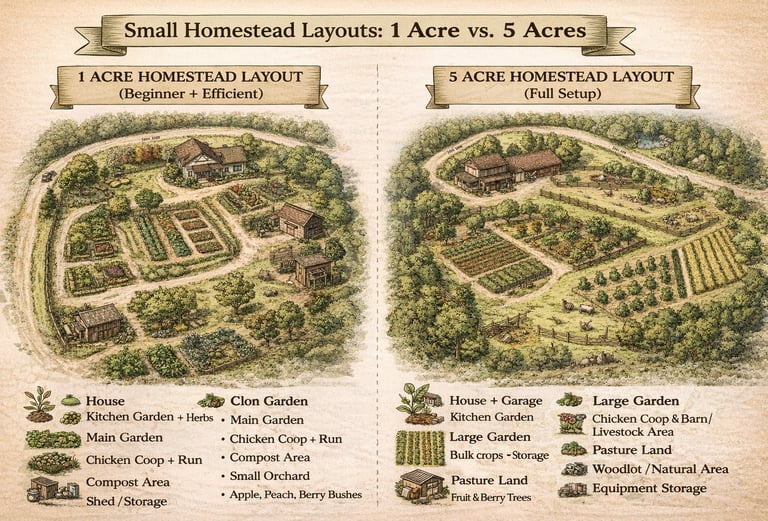
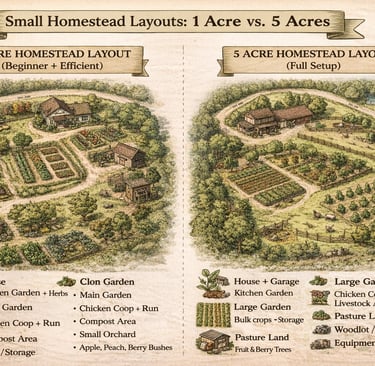
Create a homestead layout that works best for you and your family.
Whether you have half an acre or 20 acres, you can start homesteading and design a space that meets your goals for self-sufficiency, productivity, and enjoyment.
Some of the links on this website are affiliate links, which means I may earn a small commission if you choose to make a purchase through them—at no additional cost to you. I only recommend products, tools, and resources that I personally use, trust, or believe will be helpful to you on your homesteading journey.
As required by the Federal Trade Commission (FTC), this disclosure is provided to ensure full transparency. Any opinions shared on this site are my own and are not influenced by any affiliate partnerships.
Your support helps me continue to share helpful content, guides, and resources for building a more self-sufficient and intentional lifestyle. Thank you for being here!