One Half Acre Homestead Layout
HOMESTEAD LAYOUTS
Shea Thompson
4/27/20264 min read


0.5 Acre Mini Homestead Layout: The Perfect Beginner Setup
If you’ve been dreaming of starting a homestead but only have a half acre to work with—you’re in the perfect position to begin.
A 0.5 acre mini homestead is ideal for beginners, especially those living on the edge of suburban areas. With the right layout and strategy, you can grow a surprising amount of food, raise animals, and create a self-sufficient lifestyle—all without feeling overwhelmed.
Let’s break down exactly how to design it.
Why a 0.5 Acre Homestead Works
Half an acre may not sound like much, but when used efficiently, it can provide:
Fresh vegetables year-round
Eggs from your own chickens
Compost for soil health
A manageable, low-maintenance system
The key is intentional design—every square foot needs a purpose.
The Ideal 0.5 Acre Layout
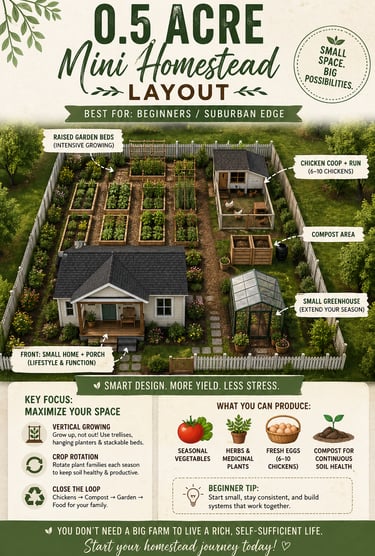
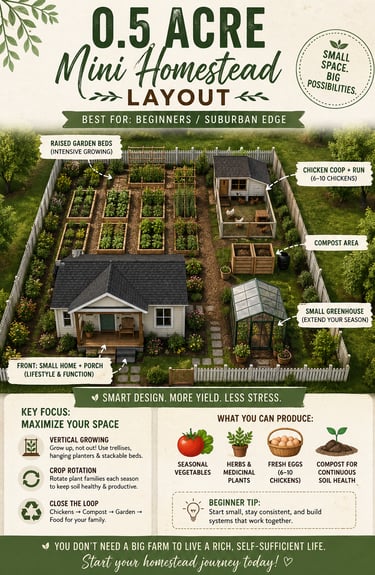
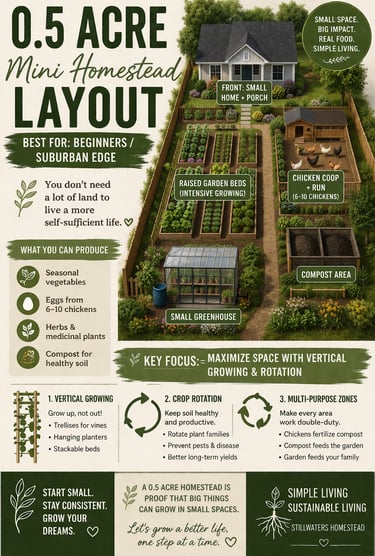
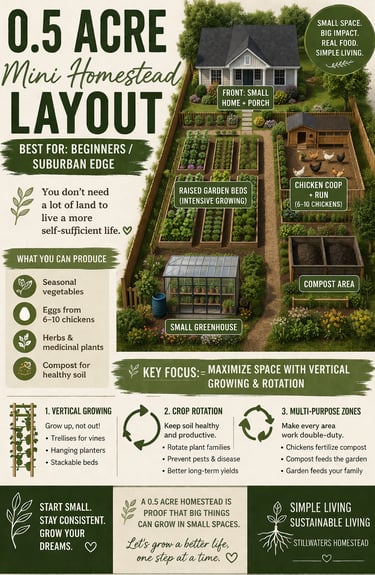
Front Yard: Home + Porch (Lifestyle & Function)
Your home sits at the front of the property, creating a natural separation between living space and food production.
Include:
A cozy front porch (perfect for rest and visibility)
Light landscaping (low maintenance plants or herbs)
Optional: small herb beds near the entrance
💡 Tip: Keep the front simple—focus your energy on the backyard production zone.
Backyard: Your Food Production Powerhouse
This is where the magic happens.
Raised Garden Beds (Intensive Growing)
Raised beds are the backbone of your mini homestead.
Why they work:
Better soil control
Higher yields in smaller spaces
Easier weed and pest management
Layout idea:
6–12 raised beds (4x8 ft each)
Organized in rows with walking paths
Drip irrigation if possible
💡 Use succession planting and crop rotation to keep food growing year-round.
Chicken Coop + Run (6–10 Chickens)
Chickens are one of the best beginner homestead animals.
Placement tips:
Position toward the back or corner of the yard
Keep downwind from the house if possible
Allow space for a secure run
Benefits:
Fresh eggs daily
Natural pest control
Manure for compost
💡 6–10 chickens is the sweet spot for a half acre—manageable but productive.
*SEE OUR BLOGS ABOUT HOW TO DESIGN AND BUILD A CHICKEN COOP*
Compost Area (Soil = Success)
Your compost system closes the loop.
What to include:
2–3 bin system (active, resting, finished)
Located near the garden—but not too close to the house
Compost materials:
Chicken manure
Kitchen scraps
Garden waste
💡 Great soil is the foundation of everything you grow.
Small Greenhouse (Extend Your Season)
A compact greenhouse adds major value to your homestead.
Uses:
Start seedlings early
Grow in colder months
Protect sensitive crops
Placement:
Full sun exposure
Near garden beds for convenience
💡 Even a small 6x8 greenhouse can dramatically increase production.
🔑 Key Focus: Maximizing a Small Space
With only half an acre, efficiency is everything.
1. Vertical Growing
Grow up, not out: Vertical growing is one of the smartest ways to increase production on a small homestead—especially on something like a 0.5 acre setup.
Vertical growing is the practice of growing plants upward instead of outward by using structures, supports, or stacking systems.
Instead of letting plants spread across the ground and take up valuable space, you guide them to climb, hang, or grow in layers. This allows you to produce more food in less square footage while also improving airflow, sunlight exposure, and plant health.
Think of it as turning your garden into a 3D growing system instead of a flat one.
On a mini homestead, space is limited—so vertical growing helps you:
Maximize every inch of your garden
Increase yields without expanding your footprint
Reduce pests and disease (better airflow)
Make harvesting easier and more organized
Types of Vertical Growing include:
Trellising (most common)
Arch Trellises & Garden Arbors
Vertical Planters & Wall Gardens
Hanging Baskets
A-Frame Structures
Livestock Panel (Cattle Panel) Trellises
Tiered or Stackable Growing Systems
2. Crop Rotation
Crop rotation is the practice of planting different types of crops in the same area in a planned sequence over multiple growing seasons. Instead of growing the same plant in the same spot year after year, you rotate plant families to keep your soil healthy and your garden productive.
At its core, crop rotation is about working with nature instead of against it.
A basic 4-part rotation might look like this:
Year 1: Tomatoes (heavy feeders)
Year 2: Beans (add nitrogen back into the soil)
Year 3: Leafy greens (use moderate nutrients)
Year 4: Root crops (use different nutrients and break up soil)
Then the cycle repeats.
Even in a small space like a 0.5 acre homestead—or just a few raised beds—crop rotation is still possible and highly effective.
Simple ways to implement it:
Label or map your garden beds each season
Rotate crops between beds each year
Keep a notebook or garden planner
Crop rotation is one of the easiest and most powerful ways to improve your garden naturally. It reduces the need for fertilizers and pesticides while keeping your soil rich and productive.
If you want healthier plants and better harvests year after year, crop rotation isn’t optional—it’s essential.
3. Multi-Purpose Zones
Make areas work double-duty:
Chickens fertilize compost
Compost feeds the garden
Garden feeds your family
🌼 What You Can Produce on 0.5 Acre
You might be surprised how much food this setup can generate:
Seasonal vegetables (tomatoes, lettuce, squash, peppers)
Herbs and medicinal plants
Eggs (from 6–10 chickens)
Compost for continuous soil improvement
🌿 Final Thoughts
A 0.5 acre mini homestead proves you don’t need a large farm to live a productive, self-sufficient lifestyle.
Start small. Stay consistent. Focus on systems that work together.
Before long, your backyard can become a thriving, beautiful homestead that feeds your family and supports a simpler way of life.